
Experiences & Recreation
Fred Gannon Rocky Bayou State Park
About
Fred Gannon Rocky Bayou State Park occupies land that spent decades as a World War II gunnery and bombing practice range before Florida turned it into a protected natural area along the shore of Rocky Bayou, an arm of Choctawhatchee Bay. The military history is easy to forget once you are standing under the park’s longleaf pines, some of which have grown for more than 300 years, but the transformation from active range to quiet state park is part of what makes the landscape here feel undisturbed. Sand pine scrub dominates large sections of the park, with an understory of Florida rosemary, reindeer moss, and several oak species, including sand live oak, sandhill oak, myrtle oak, and Chapman’s oak, all adapted to the dry, sandy soil typical of the Florida Panhandle’s coastal ridge. Native American middens and artifacts are visible in places throughout the grounds, evidence that people used this stretch of bayou shoreline long before any military training ever happened here.
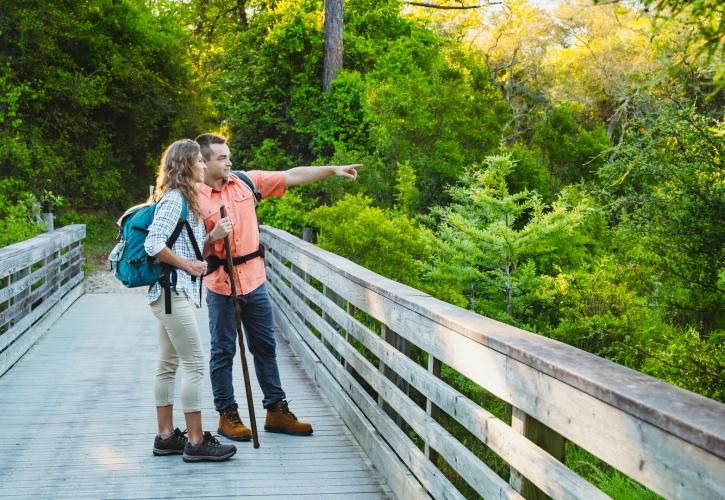
The park sits at 4281 State Road 20 in Niceville and opens daily at 8 a.m., staying open until sundown, 365 days a year, with a $5 per vehicle day-use fee. Three nature trails wind through the pine and scrub habitat for visitors who want an easy walk, and a separate fitness trail gives more ambitious hikers and runners a longer, more strenuous route. Bikers share these same paths, and the park’s flat, sandy terrain makes for approachable riding compared to some of the hillier trail systems elsewhere in the region.
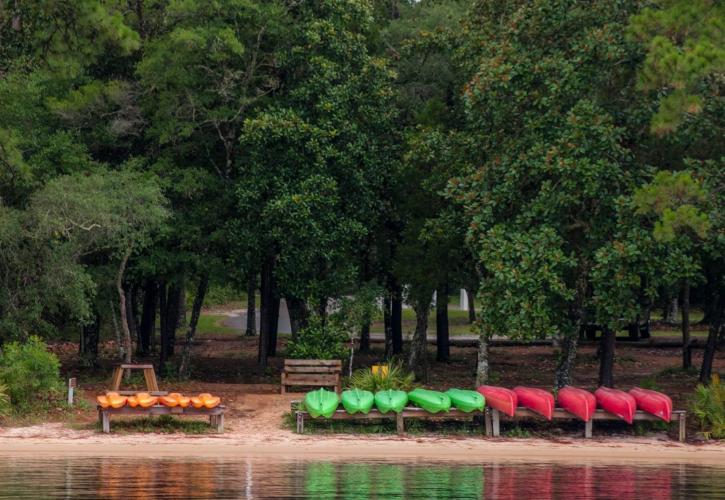
Rocky Bayou itself is the park’s centerpiece for water-based recreation. A boat ramp and a dedicated canoe and kayak launch give paddlers direct access to the bayou, and the water here is a fresh-to-brackish system that supports a wide range of fish and shellfish, including the federally endangered Okaloosa darter, a small fish found only in a handful of streams in Okaloosa and Walton counties. Anglers fish the bayou for saltwater species drawn in from Choctawhatchee Bay, and paddlers and campers regularly spot osprey and bald eagles nesting along the shoreline. The bayou falls within the Rocky Bayou Aquatic Preserve, the smallest of Florida’s 41 aquatic preserves at 367 acres, a designation meant to protect the steephead streams that feed into it, ecosystems considered among the most sensitive in the entire Southeast.
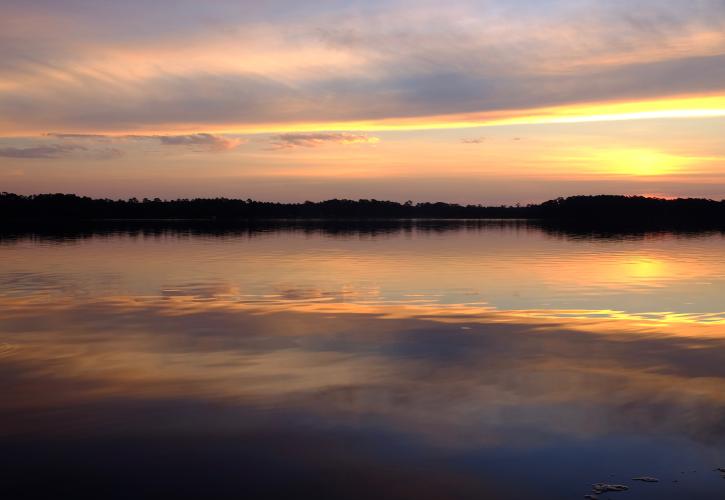
Overnight visitors can camp at the park’s campground, which has sites set up for RVs as well as more traditional tent camping, and reservations run through the statewide Florida State Parks reservation system rather than a walk-up-only policy. Day visitors have access to picnic pavilions, a playground, shower stations, and parking near the main trailheads, along with interpretive exhibits that explain the park’s natural and military history in more depth than a passing hiker would otherwise piece together. Pets are welcome in designated areas of the park, a detail worth knowing for anyone road-tripping the Emerald Coast with a dog that needs a walk that is not just a beach.
For visitors staying in Niceville, Bluewater Bay, or even Destin and Fort Walton Beach, the park makes an easy half-day trip when the beach crowds get old or the wind kicks up too much for the Gulf side. Bring a swimsuit if the day is warm enough for a dip near the launch, along with drinks, snacks, and sunglasses, since shade is inconsistent along parts of the open trails. Call the park office at 850-833-9144 before a visit if camping or a specific trail condition matters to your plans, since Florida State Parks occasionally closes sections of a park for prescribed burns or storm cleanup without much advance public notice. The mix of quiet bayou paddling, old-growth pine forest, and a rare aquatic preserve in one small park makes it one of the more ecologically distinct stops in the Niceville area.