
Arts & Culture · Galleries
Historic Bagdad Village Museum
About
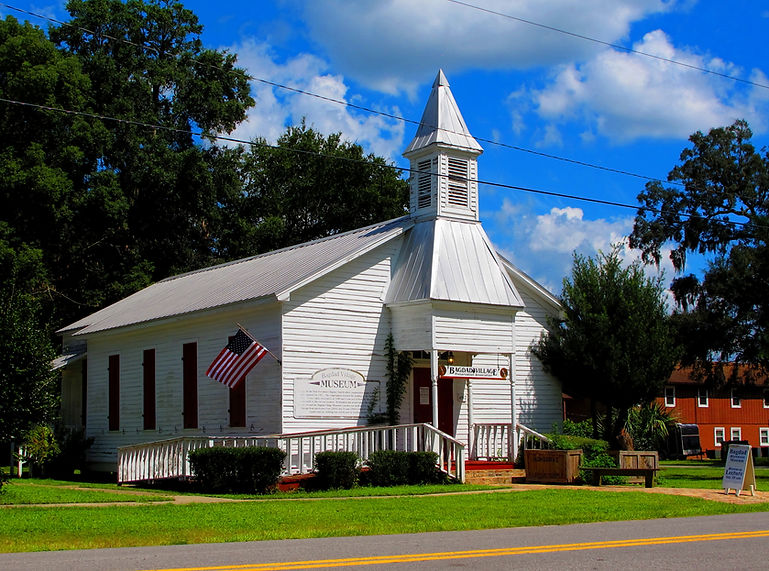
The Historic Bagdad Village Museum occupies a vernacular-style former church built in 1847 at 4543 Forsyth St in Bagdad, within the Bagdad Village Historic District, a neighborhood listed on the National Register of Historic Places for its collection of homes and civic buildings tied to the town’s nineteenth-century lumber industry. The building originally served the New Providence Missionary Baptist Church, a congregation raised by enslaved and newly freed members of the community using heart pine lumber milled locally, and it is believed to be among the oldest surviving African American church buildings in Santa Rosa County. The congregation eventually moved to a new building and donated the historic structure to the Bagdad Village Preservation Association, which converted it into the museum operating today.
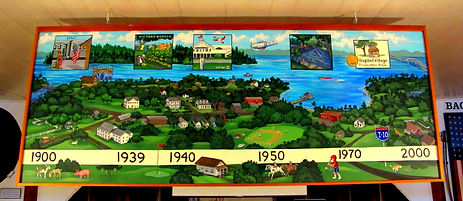
Inside, the exhibits trace Bagdad’s identity as a nineteenth and early twentieth century mill town. Display cases hold artifacts and documents from the Bagdad Lumber Mill, alongside tools from the turpentine and naval stores industry, including the tins, cups, and aprons once used to collect pine sap from the surrounding forests. A separate collection of shipbuilding hand tools and hardware speaks to Bagdad’s history as a shipbuilding center on the Blackwater River, and historical photographs throughout the museum document the mills, workers, and daily life of the village during its industrial peak. Three timeline panels suspended from the ceiling walk visitors through Bagdad’s history in roughly chronological order, a useful orientation before working through the individual display cases.
The museum’s reach extends beyond the main building. The adjacent Milligan House, a shotgun-style structure also donated to the preservation association, serves as auxiliary exhibition space for additional artifacts that would not fit inside the main church building. The Bagdad Village Preservation Association, the volunteer group that runs the museum, also organizes a monthly museum lecture series on local and regional history topics and a quarterly author’s luncheon series, and it hosts an annual visit from Bagdad Elementary School fourth-graders as part of an ongoing effort to keep the town’s mill-era history in front of new generations.
No fixed public hours or admission fees are posted for the museum, so visitors planning a stop should check with the Bagdad Village Preservation Association ahead of time or time a visit to coincide with one of the lecture series or author’s luncheon dates, when the building is open to the public. Because the museum sits within walking distance of other stops in the Bagdad Village Historic District, including Miss Luci’s Tea Room and the shaded residential streets lined with homes dating to the town’s lumber-era prosperity, it works well as one stop on a short walking tour of the district rather than a solo destination.
For visitors interested in Florida Panhandle industrial history, the museum tells the story of a mill town that period trade journals once described, at the time of its 1939 closure, as home to one of the most successful lumber operations in the Western Hemisphere, a scale of industry that is hard to picture walking the quiet streets of Bagdad today. The Bagdad Lumber Mill drew its power from a deepwater channel on the Blackwater River, which let finished lumber and, later, ships built in Bagdad’s own shipyards move out toward the Gulf of Mexico, and the museum’s artifacts, from sap-collection tins to shipbuilding hardware, help explain how a small mill town came to punch so far above its weight in the regional economy of the nineteenth century. Pairing a visit here with a walk through the wider historic district gives context to the grander homes nearby, many of which were built for mill managers and shipbuilders whose livelihoods depended on the industry this small museum preserves.