
Arts & Culture
Indian Temple Mound Museum & Heritage Park
About
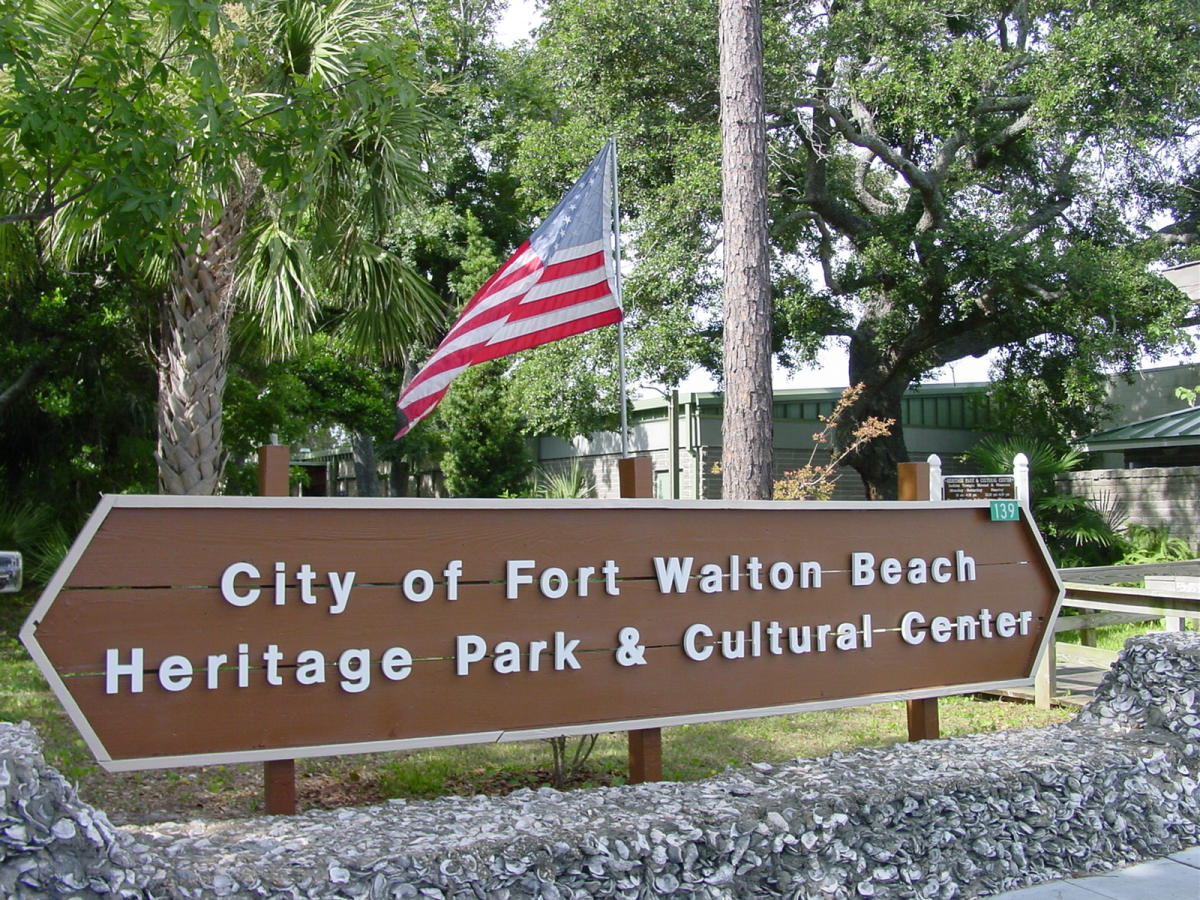
Indian Temple Mound Museum & Heritage Park anchors downtown Fort Walton Beach with three small museums packed into one city run complex: the Indian Temple Mound Museum, the earthen mound itself, the Camp Walton Schoolhouse, and the Garnier Post Office. Owned and operated by the City of Fort Walton Beach, the park sits at 139 Miracle Strip Parkway SE, a short walk from the Santa Rosa Sound waterfront, and gives visitors a fast, walkable introduction to thousands of years of local history in a single stop.
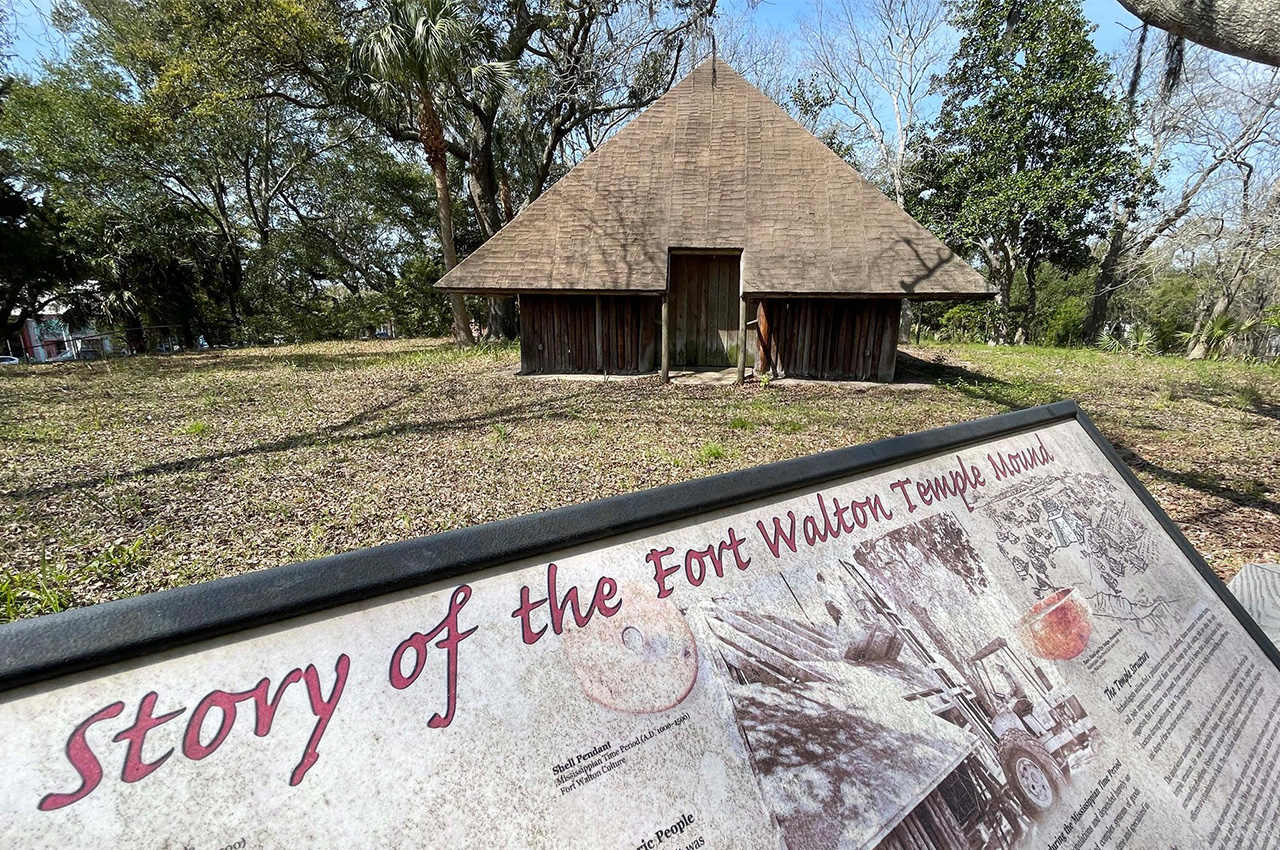
The centerpiece is the Fort Walton Temple Mound, a designated National Historic Landmark since 1964. The Pensacola Culture, a localized branch of the Mississippian tradition that thrived across the Southeast, built the platform mound in stages between roughly 800 and 1400 CE, with each successive leader adding fresh layers of sand, shell, and clay carried by hand in woven baskets. The finished mound supported a temple, an elite residence, and burial areas, and it served as the ceremonial and political heart of a thriving settlement well before European contact. Archaeologist Gordon Willey studied the site during excavations in the 1930s and used his findings there to define what archaeologists now call the Fort Walton Culture, the final prehistoric culture to occupy the region before Spanish explorers arrived along the Gulf Coast.
The museum building next to the mound opened in 1962 as the first municipally owned and operated museum in the state of Florida, and it moved into its current structure in 1972. Inside, cases hold thousands of artifacts worked from stone, bone, clay, and shell, including what specialists consider one of the finest collections of prehistoric ceramics in the southeastern United States. Exhibits trace more than 12,000 years of Native American life in the region, then continue forward through European exploration, pirate activity along the Gulf, and the area’s early Anglo-American settlers, so a single visit covers a remarkably long timeline.
Just steps away stands the Camp Walton Schoolhouse, a one-room schoolhouse built in 1911 and 1912 after Erwin S. and Anna Buck donated the land on Main Street. Miss Minnie Tippens taught the first class of 15 students in grades one through eight, working without running water or electricity and battling a persistent flea problem caused by livestock that sheltered underneath the building. The school added a second room in 1927 and grew to three rooms with three teachers by 1934, only to close in 1936 as the town’s population outgrew it and the Labor Day Hurricane of that year battered the coast. The building itself led a wandering life afterward. It became apartments during World War II, was nearly demolished twice, and was rescued by the Junior Service League in 1974 before reopening as a museum in 1976 and finally relocating to Heritage Park in 2006.
The third building, the Garnier Post Office, preserves a genuine small rural post office that also doubled as a local voting site, with displays covering postal history from 1900 through the 1950s. It opened to the public as a museum in 1988. Together the three sites form a compact but layered look at how this stretch of the Emerald Coast moved from a Mississippian ceremonial center to a rural Panhandle town. The complex keeps modest hours, open Tuesday through Saturday from 10 a.m. to 3 p.m. and closed Sunday and Monday, and admission runs only a few dollars depending on age, making it an easy add on to a downtown Fort Walton Beach afternoon. Call ahead at 850-833-9595 to confirm current hours before visiting, and plan on 45 minutes to an hour to see all three buildings at a comfortable pace. Because the park sits close to the Santa Rosa Sound, it pairs naturally with a walk along the downtown waterfront or a stop at one of the nearby seafood restaurants that line Miracle Strip Parkway.